Bambu Lab A1 mini Review
A UK review of the Bambu Lab A1 mini: what the 180 mm bed really gives you, what it will not print, what it costs to run here, and where it falls short.
Independent and reader-funded. We earn a commission if you buy through our links, at no extra cost to you. How this works.
This Bambu Lab A1 mini review covers one exact machine: the standalone A1 mini, bought without the AMS lite multi-colour unit. The Combo is a different purchase at a different price, and the two get written about as one printer. What you get is an open-frame FDM design — the plate carries the model back and forth beneath the toolhead, nothing enclosing it — a 180 × 180 × 180 mm build volume, and a short materials list: PLA, PETG, TPU and PVA are ideal, while ABS, ASA, polycarbonate and anything fibre-filled are not recommended. It was in stock at an authorised UK retailer at around the £175 mark when this page was last checked.
What follows is the part a product page leaves out: whether Bambu Lab is about to replace it, what that plate costs you in practice, and where a UK buyer stands when it breaks. The best FDM 3d printer uk guide ranks it against rivals.
Has the A1 mini been replaced?
No, and it is worth settling first. Bambu Lab began shipping the much larger A2L in June 2026, and community threads speculate freely about an "A2 mini" following it. Nothing official sits behind that: no successor to the mini appears on any Bambu Lab page reached for this article. Treat that as an absence of evidence rather than a denial — the company publishes no roadmap. What can be said is how it framed its last launch. Of the A2L, Bambu Lab wrote: "Not a successor. Not a replacement. A new addition to the portfolio."
Nor is the A2L the upgrade it looks like: its plate stops at 80 °C, exactly where the mini's stops, so it buys floor area rather than a broader materials list, and it was listed at a UK retailer around the £350 to £360 mark — roughly double. The mini was in stock in quantity when this page was last checked: the current entry point to the range, not a machine being cleared out.
The specification, and what each number changes
That moving plate is the design's one structural compromise: it shows on tall, narrow prints and nowhere else.
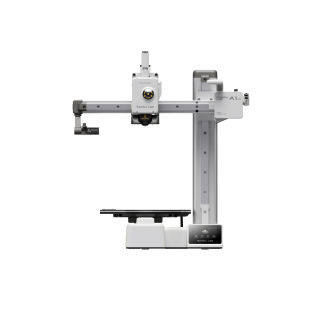
Bambu Lab A1 mini
A1 mini (standard, without AMS lite)
A small, self-calibrating open-frame printer that does PLA and PETG very well for the money and makes no attempt at anything hotter. The limits are the 180 mm plate and the 80 °C bed, and both are knowable before you buy.
- Build volume
- 180 × 180 × 180 mm
- Technology
- FDM
- Max speed
- 500 mm/s toolhead (10 m/s² acceleration)
- Enclosed
- No
- Multi-colour
- Optional (AMS lite sold separately; up to 4 spools)
- Auto levelling
- Yes (fully automatic)
What we like
- Nothing has replaced it — no A2 mini has been announced, and Bambu Lab called the larger A2L an addition to the range
- A 150 W ceiling, the lowest in the range, which works out at pennies a month at UK rates
- Filament run-out, odometry and tangle sensing plus power-loss recovery, none of it cut back for the price
- Fully automatic levelling, and owners consistently reach a good first print without opening slicer settings
- Runs on a UK socket without a converter, and takes ordinary 1.75 mm filament
What we don’t
- The smallest plate in the range at 180 mm, and colour printing spends part of it on a purge tower
- The bed stops at 80 °C, which is why ABS, ASA, polycarbonate and fibre-filled filament are all off the list
- No acoustic rating is published anywhere in the specification sheet
- A recurring complaint is the main-board cooling fan running constantly, including at idle
- The 28 mm³/s flow headline was measured using a material this printer is not recommended for
The plate is a 180 × 180 × 180 mm cube. The machine around it takes 347 × 315 × 365 mm of desk, plus clearance behind for the plate's travel and the spool, and weighs 5.5 kg — light enough to lift off one-handed.
The heaters decide its character. The hot end reaches 300 °C and is all-metal, with a stainless steel nozzle and steel extruder gears. The plate, though, stops at 80 °C — and that figure, not the hot end, is why the materials list is short. A 0.4 mm nozzle comes fitted, with 0.2, 0.6 and 0.8 mm optional: finer detail for much more time, or the reverse.
The speed figures are startling on paper: 500 mm/s toolhead, acceleration to 10 m/s². Both are ceilings no detailed model approaches; real pace comes from flow, and that number deserves a caveat nobody else prints. The 28 mm³/s maximum was measured, by Bambu Lab's own note, using ABS at 280 °C — a material the same sheet lists as not recommended here, so it is a headline unreachable on the filament the machine is cleared for.
Nothing was cut back for the price, the quiet reason the mini gets recommended so often: filament run-out, odometry and tangle sensing, power-loss recovery, fully automatic levelling, ordinary 1.75 mm filament, and a 100–240 V 50/60 Hz input that runs on a British socket with no converter.
Setup, and what the first week asks of you
Less than most people expect, and that — not any figure on the sheet — is the machine's real selling point. It arrives largely built, and the calibration a filament printer traditionally demands, squaring the frame and setting nozzle height and plate level, it handles itself before jobs. Owners and reviewers repeatedly describe reaching a good first print quickly and without changing slicer settings, with a small number instead describing an uneven plate that needed the manufacturer's re-levelling procedure first. Reported times vary too much to quote, so treat "an evening, not a weekend" as the honest version.
The software is Bambu Studio, on Windows and macOS; third-party slicers exporting standard G-code work, though Bambu Lab states some advanced features may not be supported through them. No Linux build is listed. The closed-ecosystem worry is narrower than it sounds: you can drive the machine from other software, you just lose some of what makes it pleasant.
Bambu Lab A1 mini print quality, and what it will run
On the four materials Bambu Lab clears it for, output is very good for the money, and the reason is consistency rather than resolution. Owner reports repeatedly describe the A1 mini as reliable and low-effort, which is why it is so frequently suggested as a first printer. The useful claim at this price is not finer detail than rivals, but the same detail every time.
The materials list is a hard boundary. PLA, PETG, TPU and PVA are ideal; ABS, ASA, polycarbonate, nylon, PET and anything fibre-reinforced are not recommended. The hot end is not the obstacle — at 300 °C it is hot enough. The obstacles are the 80 °C plate and the absent enclosure: those plastics shrink as they cool, and without a hot bed and still, warm air they lift or split along a layer line.
Fine tabletop figures are where filament loses to resin: terrain, bases and larger models suit this machine better than faces.
The one recurring quality complaint has a free fix. Several A1 mini owners describe gaps in the first layer that cleared once the plate was washed thoroughly and a flow calibration was run. The plates it is built around are textured and smooth PEI, which needs hot water and detergent rather than a wipe — skin oils from one print will stop the next sticking in the same spot.
Multi-colour, and whether to pay for the Combo
The standalone prints one colour at a time. Four-colour printing is an option, added by the AMS lite that feeds up to four spools — the Combo is the same printer with that unit in the box. At one UK retailer on one day the standalone sat at around the £175 mark and the Combo at around the £275 mark, so the decision is worth roughly a hundred pounds.
Here is what the comparison pages miss. Colour work consumes plate as well as filament: each change purges the old colour out of the nozzle, and the slicer builds a purge tower to take it, standing beside your model all print. On a 180 × 180 × 180 mm plate that is a meaningful share of what you started with. A recurring theme among buyers choosing between the mini and the full-size machine is that the purge tower takes up plate area on every colour print, although plenty of owners describe the smaller bed as entirely sufficient for what they make.
So: pay for the Combo if colour is why you are buying at all — bought together it is far cheaper than added later. Skip it if you mainly want objects rather than colours — single colour on the smallest plate in the range is where this machine is best, and a hundred pounds buys a lot of filament.
Noise, space and air quality in a UK home
This page will not give you the noise figure you have seen elsewhere. Retail listings circulate a decibel number for the A1 mini; Bambu Lab's specification sheet, read in full, contains no acoustic rating at all, and repeating an unattributed figure would dress marketing up as a measurement. What can be said is that owners disagree, and about a specific sound rather than the printing itself. A recurring complaint among A1 mini owners is the constantly running main-board fan, which some find intrusive at idle, although others describe the machine as quiet enough for a living space. A machine you can hear when nothing is printing belongs in a room you are not trying to sleep in.
Air quality is where the open frame cuts both ways, and almost every review skips it. The Health and Safety Executive has published research on emissions from desktop filament printers; the measurements show the particles are ultrafine, with ABS producing the highest peak concentration of those tested, and a plain enclosure well behind ducting the exhaust outdoors. This machine has no enclosure — but nor is it cleared for ABS, so the worst-behaved material in that research is one you would not run on it. PLA and PETG on a desk in a ventilated room is reasonable; a sealed cupboard, or a child's bedroom with the door shut, is not.
What an A1 mini costs to run in the UK
This is the machine's quiet advantage, and no page on the first screen raises it. Bambu Lab rates the A1 mini at a maximum of 150 W. A small plate that only reaches 80 °C avoids the four-figure peaks normal on bigger machines — the full-size A1 is rated at 1,300 W, the enclosed P2S at 1,200 W.
No steady-state figure is published, so what follows is an estimate with its assumption stated: 40 W to 80 W mid-print, since a small bed at a modest temperature spends most of a job topping heat up rather than making it. At the 26.32p per kWh set by the Ofgem price cap that is roughly 1p to 2p an hour, so thirty hours a month lands around 30p to 65p. Set that against the standing charge on a UK electricity bill, about 55p a day whether or not anything is plugged in: two days of merely having a supply costs more than a month of printing.
Filament is the cost that moves: ordinary PLA runs roughly £14 to £18 a kilogram from a UK retailer, so one spool outweighs a year of electricity. Two numbers belong in the budget beyond the printer's own £170 to £270 band: the delivery line adds around £30 per item in bulky-goods shipping — close to a sixth of the machine, and invisible until checkout.
UK warranty, spare parts and availability
Buying a Bambu Lab A1 mini in the UK is straightforward. Authorised retailers stock it, and it was listed in quantity when this page was last checked, with next-working-day delivery a week earlier. A1-series spare and wear parts are listed through the same routes — not true of every brand at this price. Bambu Lab's UK warranty runs two years from the warranty start date.
The warranty is not the protection that matters most, and no manufacturer page says so. Reports on the brand's warranty support are mixed: a recurring strand describes slow replies and cases that stay open for weeks once a machine develops a fault, while delivery and pre-sales contact are frequently praised and most owners report the problem being resolved in the end. Your statutory position is stronger, and it points elsewhere: your contract is with the retailer, not with Bambu Lab.
The Consumer Rights Act 2015 gives a short-term right to reject faulty goods for 30 days after delivery; for six months the law presumes a fault was there at handover, so proving it is not your job; and the refund is owed by the trader who sold it, within 14 days, not by the manufacturer. So if a new machine misbehaves in its first month, go to the shop rather than the support portal.
Where the A1 mini falls short
Two limitations matter, and they are the Bambu Lab A1 mini pros and cons question answered from the side that sells nothing.
The plate is the smallest in the range, and it is what owners regret. 180 × 180 × 180 mm sounds ample until you measure something you want: a helmet, a vase, a shelf bracket, a console case. Some owners say they would have chosen the larger A1 for its build volume, while others consider the mini's size and price the right trade-off for a first or second printer.
The materials list is short, and bed temperature is why. ABS, ASA, polycarbonate, nylon and anything fibre-filled sit outside what Bambu Lab recommends, because an 80 °C plate and no enclosure cannot hold those plastics flat as they cool.
One worry does not belong here, because buyers raise it constantly and the answer is reassuring: the 2024 heatbed cable recall was not about this machine. The regulator's notice covered the full-size A1 — about 12,800 units sold in a window ending January 2024, identified by the sixth character of the serial number — and the A1 mini was not included. That describes what the recall covered, not a guarantee about any individual printer.
Bambu Lab A1 mini alternatives: bigger, or four colours
The mini's real competition is the two machines Bambu Lab sells either side of it. Almost nobody needs both.
| Specification | 1 Bambu Lab A1 mini The machine reviewed | 2 Bambu Lab A1 Step up in size | 3 Bambu Lab A1 mini Combo Add four colours |
|---|---|---|---|
| Best for | Small parts, small desks | Bigger parts, hotter bed | Colour from the box |
| Build volume | 180 × 180 × 180 mm | 256 × 256 × 256 mm | 180 × 180 × 180 mm |
| Max bed temperature | 80 °C | 100 °C | 80 °C |
| Enclosed | No | No | No |
| ABS and ASA | Not recommended | Not recommended | Not recommended |
| Multi-colour | Optional extra | Optional extra | Included — four spools |
| Max power | 150 W | 1,300 W | 150 W |
| Typical UK price | £170–£270 | £240–£320 | £260–£330 |
The A1 is the one to buy if anything you want is bigger than a shoebox. Its plate is 256 × 256 × 256 mm — roughly three times the volume — and its bed reaches 100 °C rather than 80 °C, which makes large PETG parts better behaved. The materials list is the same, so it does not unlock ABS or ASA, and it asks around the £240 mark. The ten-second test: name the largest thing you can picture printing, and measure it.
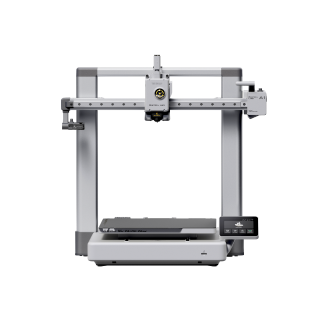
Bambu Lab A1
A1 (standard, without AMS lite)
The same machine, ecosystem and short materials list on roughly three times the volume, with a hotter bed. The upgrade owners of the mini most often wish they had bought.
- Build volume
- 256 × 256 × 256 mm
- Technology
- FDM
- Max speed
- 500 mm/s toolhead (10,000 mm/s² acceleration)
- Enclosed
- No
- Multi-colour
- Optional (AMS lite sold separately; up to 4 spools)
- Auto levelling
- Yes (fully automatic)
What we like
- Roughly three times the build volume for around £65 more at the same retailer
- A 100 °C plate rather than 80 °C, so large PETG parts behave better
- The same ecosystem, the same automatic calibration and the same sensor set
- The upgrade owners of the mini most often say they wish they had bought
What we don’t
- Half again as wide on the desk, and it draws a 1,300 W peak against the mini's 150 W
- The same short materials list — it does not unlock ABS or ASA
- No enclosure and no published noise figure here either
- Multi-colour is still a separate purchase
Buy the A1 instead if you can name one thing that would not fit in the mini's 180 mm cube. Skip it if your parts are small, or your desk cannot take a machine half again as wide.
The Combo is the one to buy if colour is the point. Same printer and plate, with the AMS lite's four spools included rather than added later, at around the £275 mark — purge-tower caveat included.
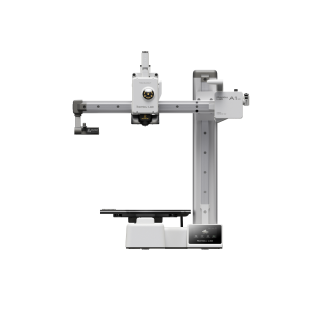
Bambu Lab A1 mini Combo
A1 mini Combo (A1 mini printer + AMS lite) — not the A1 mini standalone, the A1 Combo or the A2 series
The cheapest honest route into four-colour printing, and much better value bought together than bolted on later. The purge tower competes with your model for the smallest plate in the range.
- Build volume
- 180 × 180 × 180 mm
- Technology
- FDM / FFF, bed slinger (Cartesian), direct drive
- Max speed
- 500 mm/s toolhead (10 m/s² acceleration)
- Enclosed
- No
- Multi-colour
- Yes — AMS lite included; 4 spools. PVA is not recommended in AMS lite because the unit is an open structure (Bambu Lab)
- Auto levelling
- Yes — fully automatic
What we like
- Four-colour printing included rather than added later, which is much better value bought together
- Identical printer, so nothing about the machine is compromised to fit the bundle
- The cheapest honest route into multi-colour printing in the UK
- The AMS lite takes ordinary spools — nothing proprietary about the filament
What we don’t
- The purge tower competes with your model for the smallest plate in the range
- Around £100 more than the standalone, which buys a lot of filament instead
- Purge blobs failing to eject cleanly has a history on this machine, though firmware has reduced it
- PVA soluble supports are not recommended through the AMS lite
Buy the Combo instead if multi-colour is a reason you are buying rather than a maybe. Skip it if unsure — the AMS lite can be added later.
If all three cost too much, the honest alternative sits outside the brand. The Creality Ender 3 V3 SE is around the £150 mark with a larger 220 × 220 × 250 mm plate — beating the mini on paper on both counts. What you give up is the ecosystem: no multi-colour option, SD card rather than Wi-Fi, and a published warranty term of twelve months against two years. More printer for less money, and more of a project — the best budget 3D printers UK guide goes further.
Who should buy it, and who should not
Whether the Bambu Lab A1 mini is worth it comes down to two questions, and neither is about the printer. Does what you want to make fit inside 180 mm, and is it PLA or PETG? Two yeses and this is arguably the most sensible first 3D printer sold in the UK, at around the £175 mark. One no, and something else here is the better buy: bigger parts mean the A1, engineering materials an enclosed printer, fine figures resin. And if its only home is where somebody sleeps, buy nothing yet.
There is a harder question, and owners raise it themselves. A recurring theme in owner discussion of whether to buy at all is that having something specific to print matters more than which machine is chosen, and several describe printers that fell out of use once the novelty models were done, although others describe steady use years later. So if you cannot name two things you want to print before you order, the risk is not buying the wrong printer — it is buying a good one that ends up in a cupboard. Still weighing filament against resin? The best 3D printers UK pillar covers both.
Nothing has replaced the A1 mini, and it still asks less of a new owner than almost anything else you can buy. The limitations are real and all knowable in advance: the smallest plate in the range, a bed that stops at 80 °C, a short materials list and no published noise figure. None of it matters if your parts are small and your filament is PLA — and all of it matters the moment either stops being true.
- Buy it if
- Your models fit inside a 180 mm cube, PLA and PETG cover what you want to make, and you would rather own an appliance than a project — on a desk in a room you can ventilate.
- Skip it if
- You can already name something that would not fit, you need ABS, ASA or polycarbonate, you want fine tabletop figures, or the printer would have to live where someone sleeps.
How this article was researched
This review is research-based: no A1 mini was bought, run or measured for it, and nothing here is a first-hand result. Specification figures come from Bambu Lab's own A1 mini technical specification sheet, extracted in full and cited claim by claim; where that sheet is silent, as on noise, this page says so rather than borrowing a number from a shop listing. UK prices and stock come from authorised UK retailer listings on a stated date, given as bands because a live figure written in advance would be fiction. The running-cost arithmetic is labelled an estimate and shows its assumption. Owner-experience passages come from recurring patterns across forums and long-term reviews: no review is quoted and no rating reproduced.
Three sources could not be read: Bambu Lab's UK store redirects automated requests to its US store, so no manufacturer GBP price was available; its A1 recall page returns an error, so the recall's scope comes from the regulator's notice; and its wiki page on excess purge could not be retrieved, so a filament-waste pattern found in forum threads was left unpublished as too thinly supported.
Common questions
- Is the Bambu Lab A1 mini worth buying?
- If your models fit inside a 180 mm cube and your filament is PLA or PETG, yes — at around the £175 mark it asks less of a new owner than almost anything else, and nothing has replaced it. If you can already name something that would not fit, the full-size A1 is the better buy and the gap between them is small.
- Who is the Bambu Lab A1 mini best for?
- Someone who wants finished objects rather than a calibration hobby, and whose parts are small: household fixes, organisers, toys, prototypes, tabletop terrain, board-game pieces. It suits a first-time buyer with a desk in a room they can ventilate. It suits nobody whose only space is a bedroom, because the mainboard fan runs even at idle.
- What are the main alternatives to the Bambu Lab A1 mini?
- The two closest are made by the same company. The A1 is the step up: roughly three times the volume on a 100 °C bed, for around £65 more. The A1 mini Combo is the same printer with the four-spool AMS lite included, for about £100 more. Outside the brand, the Creality Ender 3 V3 SE offers a larger plate for less, at the cost of the ecosystem.
- Can the Bambu Lab A1 mini print ABS?
- No, and not because of the hot end. Bambu Lab lists ABS, ASA, polycarbonate, nylon and fibre-filled filament as not recommended for this machine. The reasons are the 80 °C plate and the missing enclosure: those plastics shrink hard as they cool, and without a hotter bed and still, warm air they lift off the plate or split along a layer line. It is a design boundary, not a tuning problem.
- Was the A1 mini affected by the 2024 Bambu Lab recall?
- No. The regulator's 2024 notice covered the full-size A1 — about 12,800 units sold in a window ending January 2024, identified by the sixth character of the serial number — over a heatbed cable that could short if bent. The A1 mini was not included in it. That describes what the recall covered rather than guaranteeing any individual machine.