How Much Does a 3D Printer Cost in the UK?
UK 3D printer prices run from about £140 to £1,500. Here is what each tier buys, plus the VAT, delivery and kit that decide what you actually pay.
The short answer
A 3D printer in the UK costs between about £140 and £1,500, and most first-time buyers land between about £150 and £400. Below that range nothing current is worth owning; above it you are equipping a workshop.
How much a 3D printer costs in the UK is not what it costs to start printing, and the gap is where budgets go wrong. The cheapest current filament and resin machines sit within a few pounds of each other — the Creality Ender-3 V3 SE at around the £150 mark , the ELEGOO Mars 5 between about £140 and £170 . One makes usable parts the day it arrives, with only a reel of plastic to add. The other cannot finish a model until you have spent roughly its own price again on supporting equipment.
So the cost is three figures stacked: the machine, the tax and carriage that attach on the way, and the kit it cannot work without. Take them in that order.
What the price ladder actually looks like
Four brackets cover the consumer market, and they overlap at the edges. Read them as capability tiers that happen to carry a 3D printer price UK shoppers can sort by.
Under £200: one job, done properly. A real floor, not a compromise tier. In filament, the Ender-3 V3 SE at around the £150 mark . In resin, the ELEGOO Mars 5 (about £140–£170 ) and the Anycubic Photon Mono 4 (£150–£210 ). The Bambu Lab A1 mini covers £170–£270 . You give up breadth: one material family, a modest build volume.
About £200 to £450: the mainstream, and where most people should look. Filament: Ender-3 V3 KE (around £220 ), Bambu Lab A1 (£240–£320 ), ELEGOO Centauri Carbon 2 (£280–£310 ), the enclosed Bambu Lab P1S (£330–£400 ). Resin: Mars 5 Ultra (£210–£260 ), Photon Mono 4 Ultra (£240–£290 ), Saturn 4 Ultra 16K (£370–£420 ). Here self-levelling and a maintained slicer stop being upgrades and become standard.
About £450 to £800: size and speed. Bambu Lab P2S (£450–£550 ), QIDI Plus5 (£650–£750 ); in resin the Photon Mono M7 Pro (£410–£470 ) and the large-format ELEGOO Jupiter 2 (£650–£800 ). Build volume is the usual reason to be here — the ELEGOO Neptune 4 Max (£380–£470 ) is bought almost entirely for its plate.
Above £1,000: bought for what happens after the warranty. The Prusa MK4S (£1,150–£1,300 ) and Core One Plus (£1,200–£1,500 ). Nothing here prints four times better than a mainstream machine at a quarter of the price. A recurring theme among Prusa owners is that repairability and the upgrade path are what they are paying for, rather than headline features.
Is the number on the screen the number you pay?
From a UK trader, yes — a legal position rather than a courtesy. The Price Marking Order 2004 defines the selling price shown to a consumer as the final price including VAT and all other taxes , so the standard 20% rate is already inside the figure on the page. Worth saying plainly, because guides written for other markets imply otherwise.
Two things still move the total.
Buying from outside the UK changes the arithmetic. Order direct from a manufacturer shipping from abroad and the tax arrives later, via the courier. Customs Duty starts to apply above the £135 mark, at a rate depending on the type and origin of the goods , and above that threshold import VAT is collected before the parcel is handed over, charged on the goods plus postage, packing and insurance and any duty owed . Prusa is the clearest case: its machines ship from Prague, and above £135 excluding VAT the UK VAT, duty and a courier handling fee are collected on delivery . Buyers who have ordered direct from overseas repeatedly describe the same two surprises: a carrier handling charge on top of the VAT, and time in customs clearance on top of the transit time.
Printers are bulky, and bulk costs money to move. Free-delivery thresholds are written for spools, not boxed machines. One UK retailer adds an oversize surcharge of around £45 per item on the Bambu Lab P1S , and a bulky-goods surcharge to the A1 Combo — the difference between two sellers who looked identical.
The kit that has to arrive with it
This is where resin vs FDM cost stops being close. Near-identical entry prices, very different bills for reaching a first finished object.
A filament machine needs plastic, and that is the list. Ordinary PLA runs roughly £14 to £18 a kilogram from a UK retailer . Add one reel and you are working.
A resin machine needs a second machine. Prints leave the plate coated in uncured liquid and must be washed in alcohol, then cured under ultraviolet light — the back half of the process, not a refinement. A combined wash-and-cure station sits around the £79 to £113 mark . The resin is comparable to filament, between about £16 and £28 a kilogram for common types . Then the safety kit, which the manufacturer's manual requires rather than suggests: gloves and eye protection, a well-ventilated area, and curing waste resin under UV before disposal . Ventilation is free if the machine can sit by an openable window — otherwise ELEGOO sells an air purifier for the Mars 5 separately, and the machine has no connection for one .
Reviewers consistently point out that the printer is only part of the outlay, since washing, curing, alcohol, gloves and ventilation sit outside the box. That is recorded against the Mars 5 Ultra, the step-up model in the same range, and holds across consumer resin printers generally.
So a filament machine at around the £150 mark plus a reel is printing for not much more than £165. The same headline price in resin, plus station, resin and gloves, lands between about £250 and £290 before anything is finished. The resin printer is not dearer because it is better. It is dearer because half of it is sold separately.
Two machines at the same price, and what they really cost
These are not the best printers on the ladder. They are the clearest illustration of why the ladder misleads: they cost nearly the same, and nothing else about their bills matches.
| Specification | Creality Ender-3 V3 SE | ELEGOO Mars 5 |
|---|---|---|
| Headline price | Around the £150 mark | About £140 to £170 |
| Must also buy on day one | One reel of filament | Wash-and-cure station, resin, gloves |
| Roughly, to a first finished part | From about £165 | From about £250 |
The filament floor
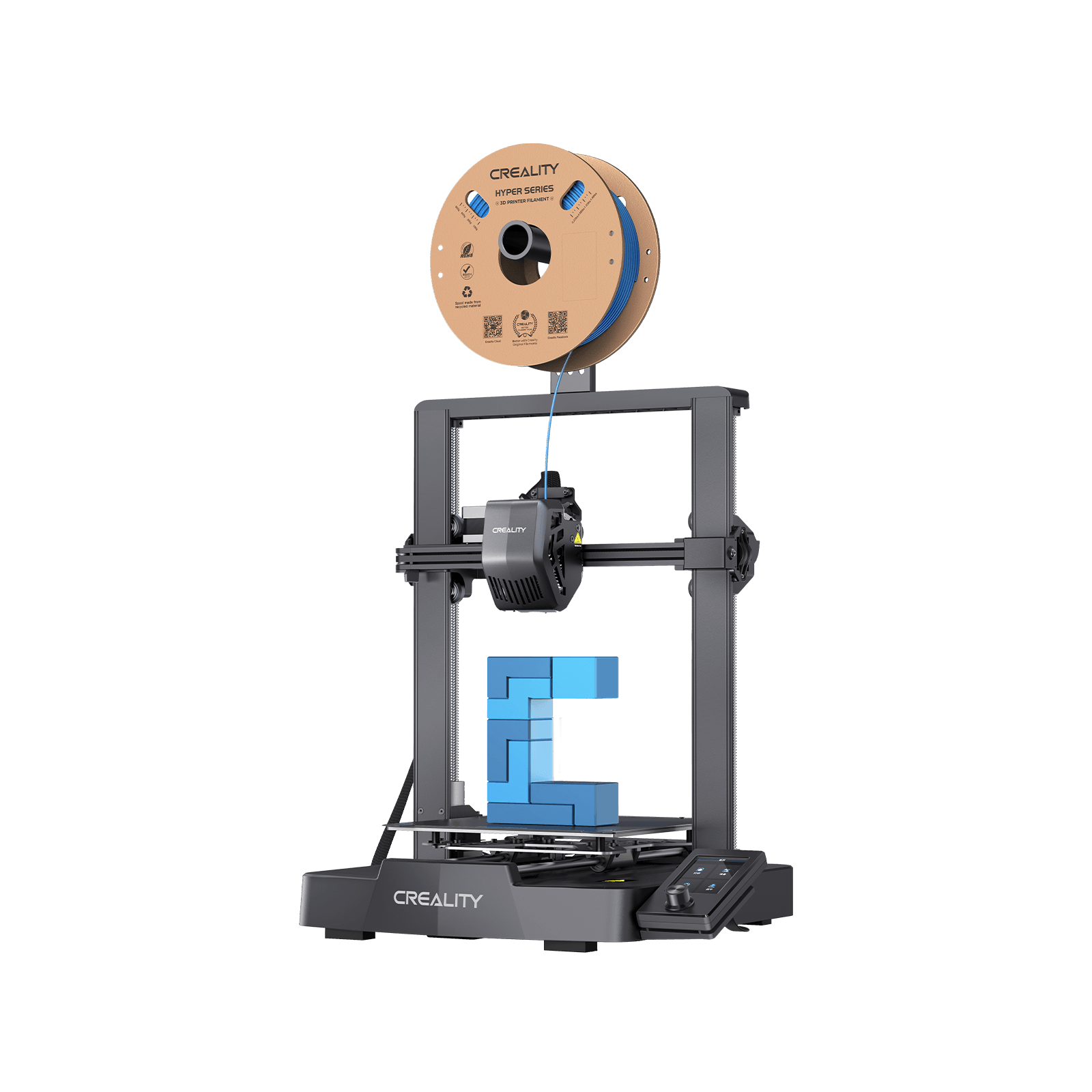
Creality Ender-3 V3 SE
Prints usable parts on day one with only a reel to add, at the cost of a card-based workflow and an after-sales queue worth knowing about.
- Build volume
- 220 × 220 × 250 mm
- Technology
- FDM
- Max speed
- 250 mm/s (2,500 mm/s² acceleration)
- Enclosed
- No
- Multi-colour
- No
- Auto levelling
- Yes (CR Touch plus strain-sensor auto Z-offset)
A build volume of 220 × 220 × 250 mm takes most household objects in one piece, and it runs PLA, PETG and TPU 95A . It levels itself , removing the failure that ends most first weeks. It was listed at around the £150 mark on Creality's UK store in September 2026, shipped from a UK warehouse . What it omits is connectivity: transfers are by SD card .
Two cautions, both cost-relevant. Reviews of Creality on UK consumer sites repeatedly raise slow and unhelpful after-sales support, which is worth weighing against the low purchase price. A number of owners suggest the V3 SE now makes most sense when discounted, since faster budget machines have narrowed the price gap.
Buy this if you want the lowest honest total to a working printer. Skip it if you want network printing or fine detail — spend into the mainstream bracket rather than stretching this one.
The resin floor
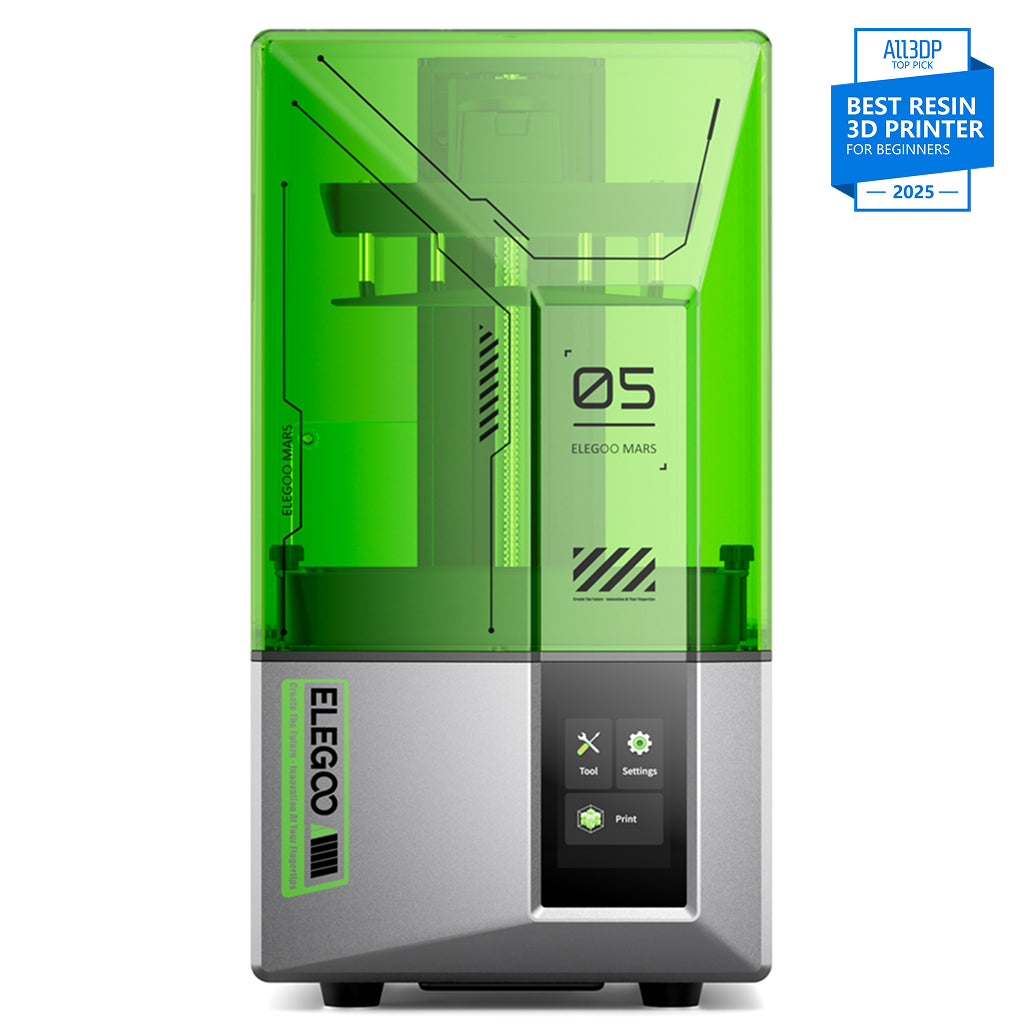
ELEGOO Mars 5
Mars 5 (4K, 6.6-inch - not the Mars 5 Ultra)
Detail a nozzle cannot reach for the same headline price as a budget filament printer, provided you budget again for washing, curing and a screen that wears out.
- Build volume
- 143.43 × 89.6 × 150 mm
- Technology
- Resin (MSLA)
- Max speed
- Up to 70 mm/h
- Enclosed
- Hinged cover (no filtration; compatible with the Mars Mate air purifier)
- Auto levelling
- Yes (one-click automatic levelling)
Resolution is the reason to be on this side. The Mars 5 images at 35 × 35 μm through a 6.6-inch 4K mono LCD , resolving detail no nozzle approaches. The trade is size: 143.43 × 89.6 × 150 mm is a narrow column, sized for figures rather than furniture. It was in stock at a UK retailer for around the £145 mark including VAT in September 2026 .
Reviewers generally describe the 4K panel as enough for most hobby printing and limiting mainly at the fine end, such as jewellery masters or display pieces examined closely. Reviewers report that the levelling-failure alarm does fire in normal use, and that clearing it means draining and filtering the resin — a chore, though better than finding the problem after a whole print has failed.Buy this if you print miniatures or detailed models and have budgeted the wash-and-cure station rather than hoping to add it later. Skip it if you want large or load-bearing parts, or the total has to stay near the headline figure.
What wears out, and what a replacement costs
Which parts of a printer are meant to be used up, and how fast, can reverse which of two machines is cheaper by the end of year one. The quickest tell is a warranty with uneven terms. ELEGOO covers the Mars 5 for 12 months, but the LCD screen for 3 months and the resin tank and build plate for 6 . That is not meanness; it is a parts list, disclosed.
On a filament machine the wear items are cheap. A spare high-speed nozzle kit for the Ender-3 V3 SE is under £10, with the ceramic heating-block quick-swap kit at about £33 to £40 for the whole hot end . Nozzles wear slowly on ordinary PLA and fast on anything abrasive — either way, pocket money.
On a resin machine they are not. Release film is a scheduled replacement: ELEGOO sells it in packs of five at around the £27 mark, a little over £5 a sheet . The screen behind it is the expensive one — a replacement Mars 5 LCD runs around the £55 mark at a UK retailer — and a metal resin tank or spare build platform is about £27 each . Screens scale with the machine: on the larger Saturn 4 Ultra 16K a replacement panel sits between about £112 and £129 .
Reviewers repeatedly frame resin, release film, alcohol and an eventual screen as an annual cost rather than a one-off, and warn that the printer price understates a year of printing. That is recorded against ELEGOO's Saturn machines rather than the Mars 5, but they are the same class of part in the same place.
What the extra money actually buys
Cheap vs expensive 3D printer arguments stall because both sides are right about different things. The cheap machine lays down the same plastic to a similar standard; what separates them is how much of the work it does for you, and how long it stays useful.
The bottom rung buys the printing and omits the conveniences. Reviewers consistently point out how much this machine leaves out — no Wi-Fi, no app, no camera and no resin sensor — with a USB-only workflow, and are divided on whether that is a fair trade at the price. Recorded against the Anycubic Photon Mono 4, and the shape holds across the sub-£200 bracket: you get the print and you do the logistics.
The mainstream bracket buys attention you no longer have to pay — network transfer, dependable first layers, a maintained slicer. Multi-material is the clearest case of paying once instead of twice: the Bambu Lab A1 Combo, at £340–£430 , bundles the colour-changing unit that would otherwise be a later purchase. Owners frequently recommend buying the Combo rather than adding the AMS lite later, mainly for the convenience of hands-off colour changes.
Above that you buy continuity rather than capability. A four-figure machine is documented parts and a published upgrade path — worth it if you will still be printing in five years, and a poor trade if you are not sure about five months.
Four ways the cost question goes wrong
Pricing a service instead of a machine. Search this question and much of the results set quotes a few pounds for a small part and something around the £40 mark for a larger one. Those are bureau prices — what a company charges to print an object and post it to you. Useful if you need six parts a year; silent on what a printer costs.
Treating electricity as the main cost. UK domestic electricity sits at about 26p per kWh under the Ofgem price cap , and a desktop printer is not a storage heater. Plastic, film and screens cost far more over a year than the power does. Running-cost arithmetic is a separate subject, and this guide stops at the purchase.
Budgeting the machine and forgetting the process. Almost entirely a resin problem: without a wash-and-cure station, prints come out sticky rather than finished.
Assuming the cheapest machine is the cheapest to own. Low prices are usually paid for somewhere else. Reviewers note that the cheaper FEP film on this model is generally reported to need replacing more often than the ACF film used on dearer machines. That one is recorded against the Photon Mono 4. None of which makes a budget machine a bad buy; it makes the headline price an incomplete one.
Where to go next
Turn the budget into a shortlist. Under about £250, start with the best budget 3d printer uk shortlist, where both machines above are weighed against the rest of that bracket.
Settled on filament? The best FDM 3D printers roundup covers the £200 to £800 range where most of the worthwhile choices sit. If detail is what you want, and you have accepted the wash-and-cure line, the best resin printers roundup does the same on that side.
Still choosing between technologies rather than machines? Decide that first. The cost of getting it wrong is an entire printer.
How this article was researched
This guide is research-based. No machine here was bought, tested, measured or photographed by us, and nothing on the page is offered as first-hand use.
Every specification and price band comes from a manufacturer page, an official manual, UK legislation, a government source or an authorised UK retailer listing, each recorded with the date it was checked. Prices are given as bands because exact figures go stale within weeks. Prices and stock were last checked on 16 September 2026.
Owner-experience passages are marked and summarise recurring patterns across forums, long-term reviews and retailer Q&A — never quotations, never a rating. Where a pattern is recorded against a sibling model rather than the machine being discussed, the page says so.
Common questions
- What should UK buyers know about how much does a 3d printer cost in the uk?
- Three things that most price guides skip. First, a price shown by a UK trader is the final price: the Price Marking Order 2004 defines it as including VAT and all other taxes, so the 20% is already inside the figure and nothing is added at the checkout. Second, that protection disappears the moment you order from outside the UK — above the £135 mark Customs Duty can apply and import VAT is collected by the courier before it hands over the parcel, calculated on the goods plus postage and any duty. Third, printers are bulky, and oversize or bulky-goods delivery surcharges are applied by some UK retailers on top of an otherwise free delivery threshold. Between them these can separate two sellers who looked identical on price.
- Which factors change the answer for FDM and resin users?
- The gap between the headline price and the cost of a finished object. A filament machine needs one reel of plastic, at roughly £14 to £18 a kilogram, and it is working. A resin machine cannot finish a part at all without washing it in alcohol and curing it under UV, so a combined wash-and-cure station at around the £79 to £113 mark is part of the purchase rather than an accessory, alongside gloves, eye protection and ventilation that the manufacturer's manual requires. Wear parts then pull the same way: filament nozzles are pocket money, while a resin machine consumes release film on a schedule and eventually needs a replacement LCD screen. Two machines that cost the same in the shop will not have cost the same a year later.
- What practical checklist should a buyer follow?
- Five steps, in order. One, decide filament or resin first, because that decides everything downstream and getting it wrong costs an entire printer. Two, set the budget for the whole process rather than the machine — on resin that means adding a wash-and-cure station and consumables before you compare any prices. Three, check who you are buying from: a UK trader quotes a final price, while ordering direct from abroad can add duty, import VAT and a carrier handling fee. Four, look for a delivery surcharge on a bulky item before you decide which seller is cheapest. Five, read the warranty for uneven terms, because a shorter period on one component is the manufacturer telling you which part wears out and will need buying again.