Best High-Resolution Resin Printers UK
The best high-resolution resin printers in the UK, ranked by real pixel size rather than the K number on the box — plus what a finer screen costs to run.
Independent and reader-funded. We earn a commission if you buy through our links, at no extra cost to you. How this works.
If you are shopping for the best high resolution resin printer in the UK and judging by the number on the box, this ranking will not be the one you expect. The finest pixel available here belongs to the ELEGOO Saturn 4 Ultra 16K, at 14 × 19 μm. The coarsest pixel on this page also says 16K: the ELEGOO Jupiter 2 exposes at 20 × 26 μm, bigger in both directions than the 9K ELEGOO Mars 5 Ultra's 18 × 18 μm.
Neither figure is a misprint. The K number counts pixels across the panel, not their size, because a wider sheet of glass spreads the same count over more millimetres. So these six are ordered by pitch in micrometres, then by the hardware that lets each one reach it.
The six printers ranked by pixel size
Read the pixel row first. Everything else is either where that pitch comes from or a limit on how much of it you can use.
| Specification | 1 ELEGOO Saturn 4 Ultra 16K Finest pixel on a large plate | 2 Anycubic Photon Mono 4 Ultra Finest square pixel | 3 ELEGOO Mars 5 Ultra Square pixel, least work | 4 Anycubic Photon Mono M7 Pro Most detail per job | 5 ELEGOO Saturn 4 Cheapest 12K panel | 6 ELEGOO Jupiter 2 Biggest build at 16K |
|---|---|---|---|---|---|---|
| Pixel size | 14 × 19 μm | 17 × 17 μm | 18 × 18 μm | 16.8 × 24.8 μm | 19 × 24 μm | 20 × 26 μm |
| Screen | 10-inch 16K | 7-inch 10K | 7-inch 9K | 10.1-inch 14K | 10-inch 12K | 14-inch 16K |
| Plate | 212 × 118 × 220 mm | 153 × 87 × 165 mm | 153 × 78 × 165 mm | 223 × 126 × 230 mm | 219 × 123 × 220 mm | 302 × 162 × 300 mm |
| Finest layer | 0.01 mm | 0.02 mm | 0.01 mm | 0.01 mm | 0.01 mm | 0.01 mm |
| Levelling | Automatic | Four-point manual | Automatic | Levelling-free | Automatic | Automatic |
| Heated vat | Yes | No | No | Yes | No | Yes |
| Price band | £370–£420 | £240–£290 | £210–£260 | £410–£470 | £250–£310 | £650–£800 |
| UK availability | ELEGOO UK, 3DJake | Anycubic UK, 3DJake | ELEGOO UK, 3DJake | Anycubic UK, 3DJake | ELEGOO UK, 3DJake | ELEGOO UK direct only |
Why the K number is not the resolution
A resin printer does not trace a layer, it prints one. A monochrome LCD masks a single ultraviolet source, so the whole cross-section cures in one exposure and the screen's pixel grid is reproduced directly in the part. The panel is the printing element, and the K figure is only how many pixels sit across it — 15120 × 6230 on the Saturn 4 Ultra 16K. Spread that count over a wider sheet of glass and every pixel grows.
| Specification | Mars 5 | Mars 5 Ultra | Photon Mono 4 Ultra | Saturn 4 | Photon Mono M7 Pro | Saturn 4 Ultra 16K | Jupiter 2 |
|---|---|---|---|---|---|---|---|
| Screen label | 4K | 9K | 10K | 12K | 14K | 16K | 16K |
| Panel size | 6.6-inch | 7-inch | 7-inch | 10-inch | 10.1-inch | 10-inch | 14-inch |
| Pixel size | 35 × 35 μm | 18 × 18 μm | 17 × 17 μm | 19 × 24 μm | 16.8 × 24.8 μm | 14 × 19 μm | 20 × 26 μm |
Reading along that bottom row is the argument. The 9K Mars 5 Ultra resolves at 18 × 18 μm, finer in both axes than the 12K Saturn 4 at 19 × 24 μm, which is finer in both axes than the 16K Jupiter 2 at 20 × 26 μm. Three tiers, ranked exactly backwards, because the panels are 7-inch, 10-inch and 14-inch. Hunting for the best 16K resin printer rather than the best 12K resin printer gets you a larger machine far more reliably than a finer one. No 8K machine made this list at all: the small-format ranges from both brands step from 4K to 9K and 10K, so a search for the best 8K resin printer mostly returns previous-generation hardware.
The other half of the sheet is pixel shape. Only two of the six are square: 17 × 17 μm on the Photon Mono 4 Ultra, from a 9024 × 5120 grid, and 18 × 18 μm on the Mars 5 Ultra. The rest are finer across the plate than along it, the 14K M7 Pro most of all at 16.8 × 24.8 μm. On a machine like that the detail a part shows depends which way round it sits, so a search for the best 14K resin printer tells you less about edge quality than one honest micrometre figure would.
Where is the useful limit? Reviewers who work in miniatures argue the 12K to 16K step is not significant at tabletop viewing distance, and that the heated tank is the real difference between the two. Below roughly 20 μm the pixel stops being what you notice first. Above 30 μm it is unmistakable: the Mars 5's 35 × 35 μm covers more than four times the area of the 16K's pixel.
How we chose these six
No machine here was bought, opened or printed with. The ranking comes from manufacturer specification pages and manuals, UK retailer listings checked for stock and price band, and published reviews and forum threads read for recurring patterns rather than individual opinions. Where a figure could not be confirmed from a primary source it has been left out and said so. The general approach is set out in our review methodology.
Candidates were ranked on verified XY pixel size first, then on whether the rest of the machine can deliver it. Price separated machines of similar pitch; it never promoted one. Three machines from our wider best resin printer uk guide are absent: the 12K Saturn 4 Ultra duplicates the cheaper Saturn 4's 19 × 24 μm pitch, the standard Photon Mono 4 shares the 4 Ultra's pixel but stops at 0.03 mm layers on a rail rated to 30 μm, and the Mars 5 is not a high-resolution printer at 35 × 35 μm.
Finest pixel on a large plate: ELEGOO Saturn 4 Ultra 16K
A fine pixel and a plate worth filling usually pull against each other. Here they do not. The 14 × 19 μm pitch is the finest you can buy in the UK at this price, and it arrives on a 10-inch panel, so the detail covers a 212 × 118 × 220 mm build area.
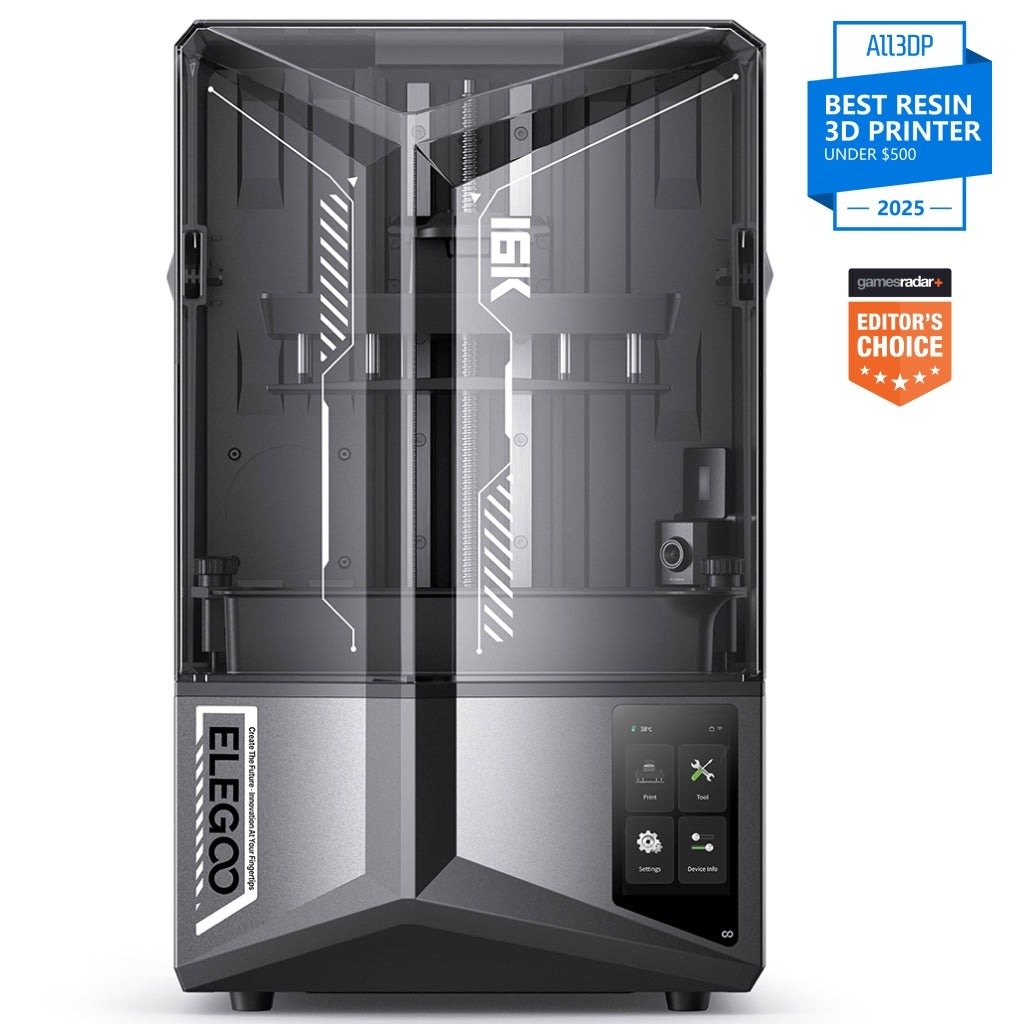
ELEGOO Saturn 4 Ultra 16K
Saturn 4 Ultra 16K (not the 12K Saturn 4 Ultra)
The finest XY pitch in the UK at this money, on a plate worth the resolution. The heated vat matters more day to day than the extra K.
- Build volume
- 211.68 × 118.37 × 220 mm
- Technology
- Resin (MSLA)
- Max speed
- Up to 150 mm/h (fast mode, manufacturer maximum)
- Enclosed
- Lid (acrylic UV cover)
- Multi-colour
- No
- Auto levelling
- Yes (one-click automatic levelling)
What we like
- 14 × 19 μm — the finest XY pitch you can buy in the UK at this money
- That pitch on a 10-inch panel, not a 7-inch one: a 212 × 118 × 220 mm plate
- Resin tank held at 30 °C, which is what makes an unheated room workable
- Tilt release and 0.01 mm layers, so neither axis holds the pixel back
What we don’t
- Suction under wide flat layers, not the printer, is the usual cause of a failure
- No filtration of its own — a ventilated room or a purifier is part of the buy
- Three months of warranty on the screen against twelve on the machine
- Needs 327 × 329 × 548 mm of bench before you add clearance
The 15120 × 6230 grid is the headline; the lines that decide whether you see it are quieter. Layers reach 0.01 mm at 0.02 mm Z accuracy, so the vertical axis is not the bottleneck, and the vat tilts to peel each layer off the film rather than lifting straight up. The tank is held at 30 °C — the most useful line on the sheet if the printer lives somewhere cold.
Owners and reviewers repeatedly single out the heated vat as the feature that makes cold-room printing practical, though it does add a warm-up wait before each job.Against that: suction under a wide flat layer is what fails prints on a panel this size, there is no filtration built in, it wants 327 × 329 × 548 mm of bench, and the screen carries three months of cover against the machine's twelve.
Buy this if you want the finest detail available in the UK on a plate you can fill, and the room is not always warm. Skip it if your parts would fit a smaller panel — the Mars 5 Ultra gives you a square pixel for less.
Finest square pixel: Anycubic Photon Mono 4 Ultra
When detail runs in more than one direction — threads, lettering, a mechanism — a square pixel beats a nominally finer rectangular one, because edge quality is the same whichever way the part sits. At 17 × 17 μm from a 9024 × 5120 grid, this is the finest square pixel in the UK line-up and the cheapest machine here that belongs in the conversation.
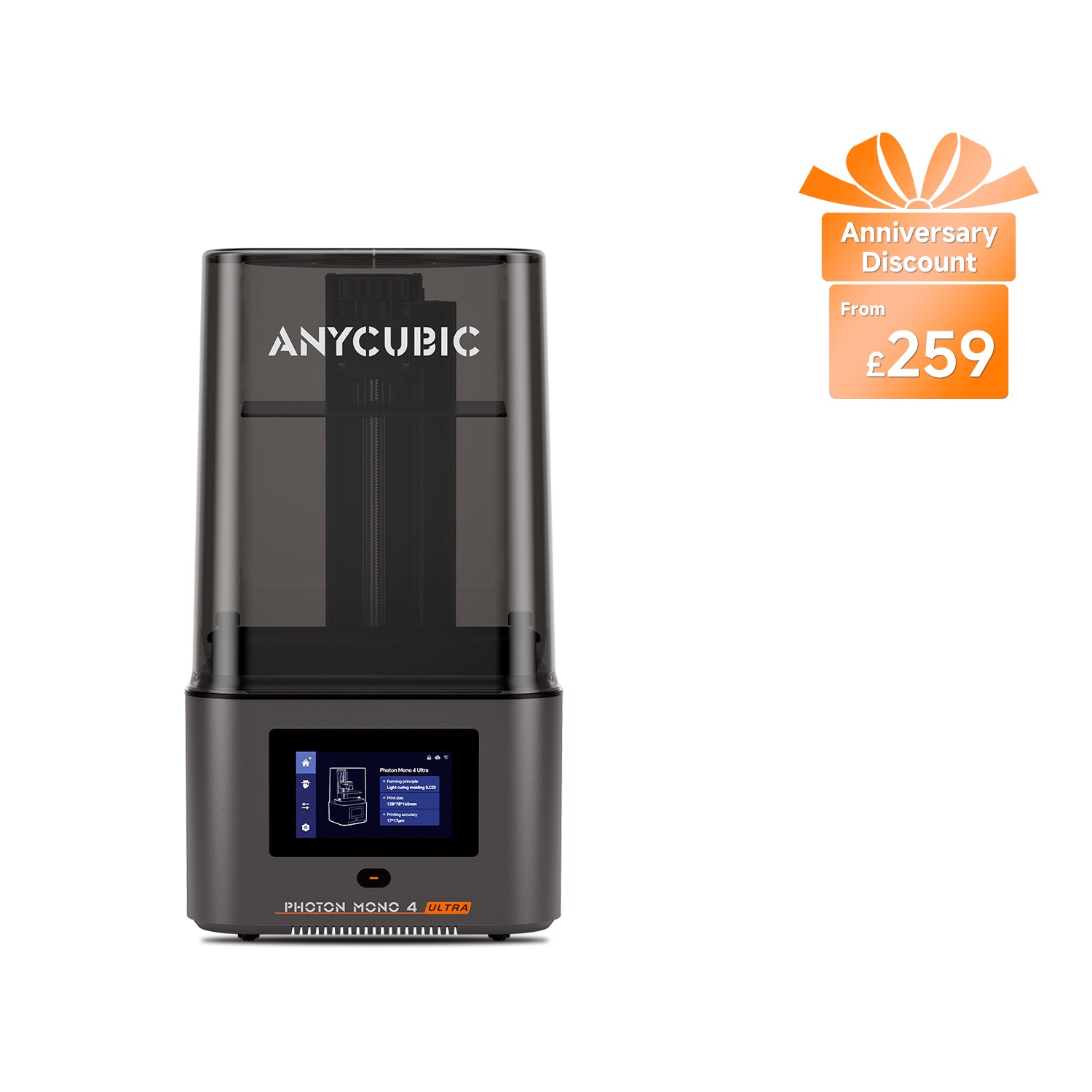
Anycubic Photon Mono 4 Ultra
Photon Mono 4 Ultra (not the Photon Mono 4 or Photon Mono 4 Max)
Equal resolution across both plate axes at the lowest price here, if you accept a small plate, manual levelling and a 0.02 mm layer floor.
- Build volume
- 153.4 × 87 × 165 mm (2.2 L)
- Technology
- Resin (MSLA)
- Max speed
- Max ≤80 mm/h; standard resin at 0.1 mm ≤80 mm/h, high-speed resin at 0.1 mm ≤120 mm/h (manufacturer maxima)
- Enclosed
- Lid (removable UV cover; Anycubic lists no hinged cover)
- Multi-colour
- No
- Auto levelling
- No — 4-point manual levelling
What we like
- 17 × 17 μm square pixels — the same detail whichever way the part faces
- The lowest price on this page, in the £240–£290 band
- Light source rated at 3,500 μW/cm² or better behind a Fresnel lens
- 66 W — the lowest power draw of the six by a wide margin
What we don’t
- Layers stop at 0.02 mm, so the Z axis limits it before the pixel does
- Four-point manual levelling, with no adjustable feet to correct a slope
- No vat heating, which a cold room punishes
- Sensor self-checks only, no camera, and the bundled slicer needs watching
Equal pitch removes a decision, which frees orientation for drainage, supports and print height instead of edge quality. Behind the mask is a COB emitter with a Fresnel lens rated at 3,500 μW/cm² or better, and even, collimated light is what stops a fine pixel bleeding into its neighbours.
Reviewers repeatedly describe this printer as dependable for small detailed models, with one multi-part hands-on test reporting no failures across its print runs.Two real costs come with the price. Layers stop at 0.02 mm rather than the 0.01 mm the ELEGOO machines reach, and levelling is a four-point manual job — the only machine here without automation for it. The plate is 153 × 87 × 165 mm, there is no camera, and no vat heating. It draws 66 W, the lowest here by a wide margin.
Buy this if your parts are small, detailed and orientation-sensitive, and you would rather set levelling yourself. Skip it if you want finer layers, a heated vat or hands-off setup — the Mars 5 Ultra has all three for a modest step up.
Square pixel with the work taken out: ELEGOO Mars 5 Ultra
The appeal here is not the headline figure but that a fine square pixel arrives without a calibration ritual in front of it. The pitch is 18 × 18 μm from a 7-inch 9K panel — a micrometre coarser than the Anycubic in both axes, and finer than either 12K machine on this page.
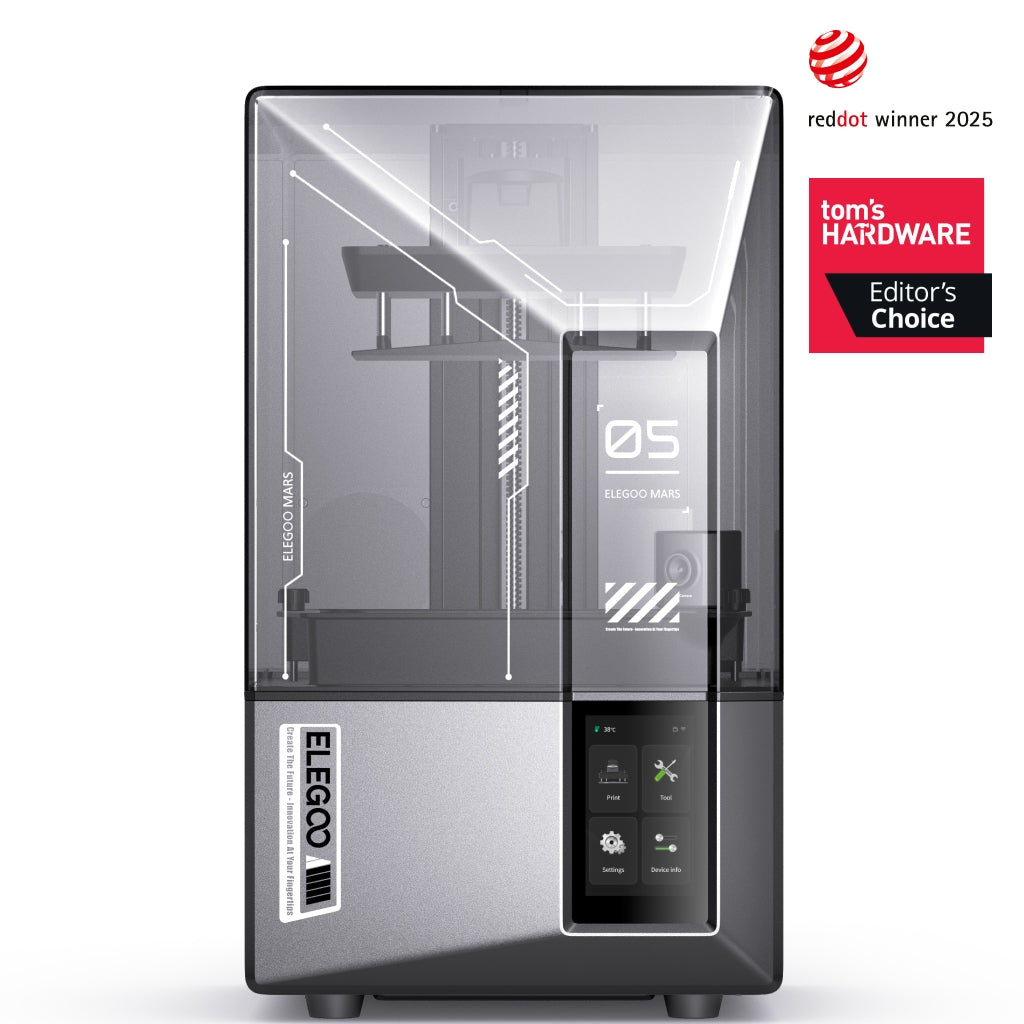
ELEGOO Mars 5 Ultra
Mars 5 Ultra 9K (not the non-Ultra Mars 5)
A square 18 μm pixel, one-click levelling, tilt release and 0.01 mm layers at the lowest entry price here. Cold resin is what will defeat it.
- Build volume
- 153.36 × 77.76 × 165 mm
- Technology
- Resin (MSLA)
- Max speed
- Up to 150 mm/h (manufacturer maximum)
- Enclosed
- Lid (acrylic UV cover)
- Multi-colour
- No
- Auto levelling
- Yes (one-click automatic levelling)
What we like
- 18 × 18 μm square pixels, finer than either 12K machine here
- One-click levelling, tilt release and 0.01 mm layers at the lowest entry price
- AI camera, resin and residue alarms, and power-loss resume
- Two UK routes, with screens, tanks and plates all listed individually
What we don’t
- Cold, thick resin is the dominant cause of failure and there is no heated vat
- 153 × 78 × 165 mm — the smallest plate here, and the Z height is the real limit
- Reviewers are split on how much the corner-mounted camera can see
- No built-in filtration; the air purifier is a separate purchase
One-click automatic levelling and tilt release handle the two jobs that most often separate a good first month from a frustrating one: getting the plate square, and getting a layer off the film without tearing fine features away with it. Layers reach 0.01 mm at 0.02 mm Z accuracy, with warp detection, resin alarms and power-loss resume.
The dominant limitation is the automation's own weak point. A recurring account across independent reviews is that cold, thick resin is what defeats this machine's automation — the levelling sensor triggers early and the first layer stays on the film — and that warming the resin or the room is the usual fix. There is no heated vat to do that for you, which is exactly what the 16K adds. The plate is the other constraint, at 153 × 78 × 165 mm the smallest here.
Buy this if you want fine, square printing with the least setup work, in a room that is reasonably warm. Skip it if the room is unheated, or this plate will not hold what you want to make — the Saturn 4 gives more than twice the area.
Most detail per job: Anycubic Photon Mono M7 Pro
Resolution and throughput are usually a trade, because the fine-pixel machines have small plates. This one buys out of that with area. Its pixel is 16.8 × 24.8 μm — finer across the plate than either 12K machine, coarser along it — spread over a 223 × 126 × 230 mm volume of 6.5 litres, the most detailed surface you can expose in a single job here.
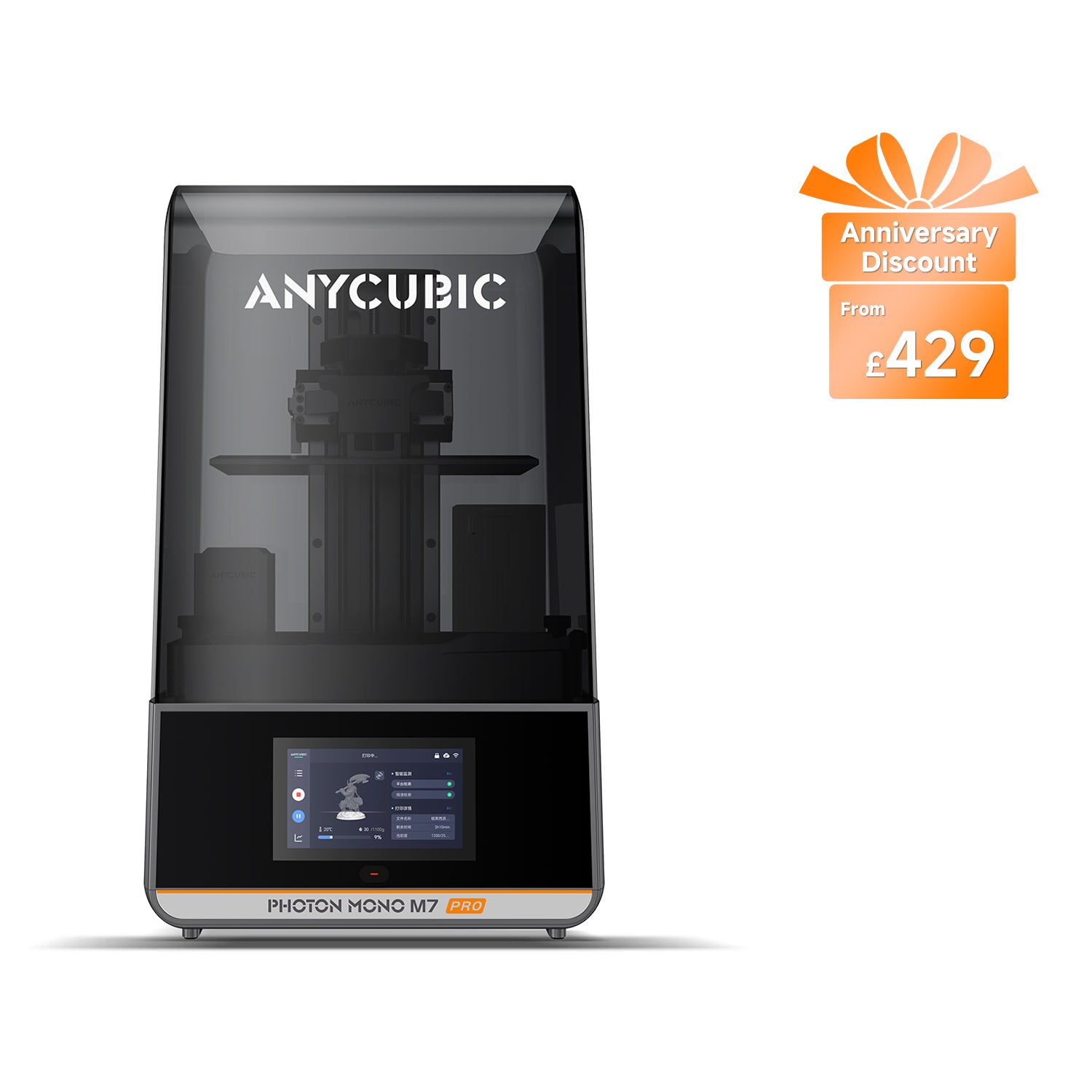
Anycubic Photon Mono M7 Pro
Photon Mono M7 Pro (not the Photon Mono M7 or M7 Max)
The largest practical plate at a fine pitch, with a heated vat and 10 μm Z precision. The resin automation is also what owners spend the most time cleaning.
- Build volume
- 223 × 126 × 230 mm (6.5 L)
- Technology
- Resin (MSLA)
- Max speed
- Max ≤130 mm/h; standard resin at 0.1 mm ≤130 mm/h, high-speed resin at 0.1 mm ≤170 mm/h (manufacturer maxima)
- Enclosed
- Lid (removable UV cover; Anycubic lists no hinged cover)
- Multi-colour
- No
- Auto levelling
- Yes (levelling-free)
What we like
- The largest detailed plate per job: 223 × 126 × 230 mm, at 6.5 litres
- Dual linear rails rated to 10 μm — the tightest Z figure on this page
- Heated vat, levelling-free setup and 0.01 mm layers
- Six months of warranty on the screen rather than three
What we don’t
- 16.8 × 24.8 μm: edge quality is not the same in both plate axes
- The automatic resin feed is reported as inconsistent as the bottle empties
- Pump, tubing and a bolted tank add cleaning steps on a resin change
- 240 W, and no resume after a power cut
Because MSLA cures a whole layer at once, a full plate takes about as long as a single part, so plate area is really production rate. The engineering is the strongest here: dual linear rails rated to 10 μm, the tightest Z figure on this page, layers to 0.01 mm, levelling-free operation and a light source rated at 5,500 μW/cm² within ten per cent.
The pixel shape is the honest caveat: edge quality is not the same in both directions, so this is the machine on which angling a part on the plate earns the most. The automation is the other. Owner and reviewer reports repeatedly describe the automatic resin feed as inconsistent, particularly as the bottle empties, and the manufacturer publishes its own troubleshooting for it. It is also hungry at 240 W and does not resume after a power cut.
Buy this if you print batches and want the most detailed plate you can expose in one run. Skip it if you print one part at a time, or a pump in the resin path sounds like the opposite of what you want — the 16K is simpler and finer.
The cheapest 12K panel: ELEGOO Saturn 4
There is a version of this purchase where you want the big panel and little else. The pitch is 19 × 24 μm from a 10-inch 12K screen, identical to the Saturn 4 Ultra built on the same chassis, across the same 219 × 123 × 220 mm plate — in a £250–£310 band. Nothing else puts a 10-inch panel in reach for that money.
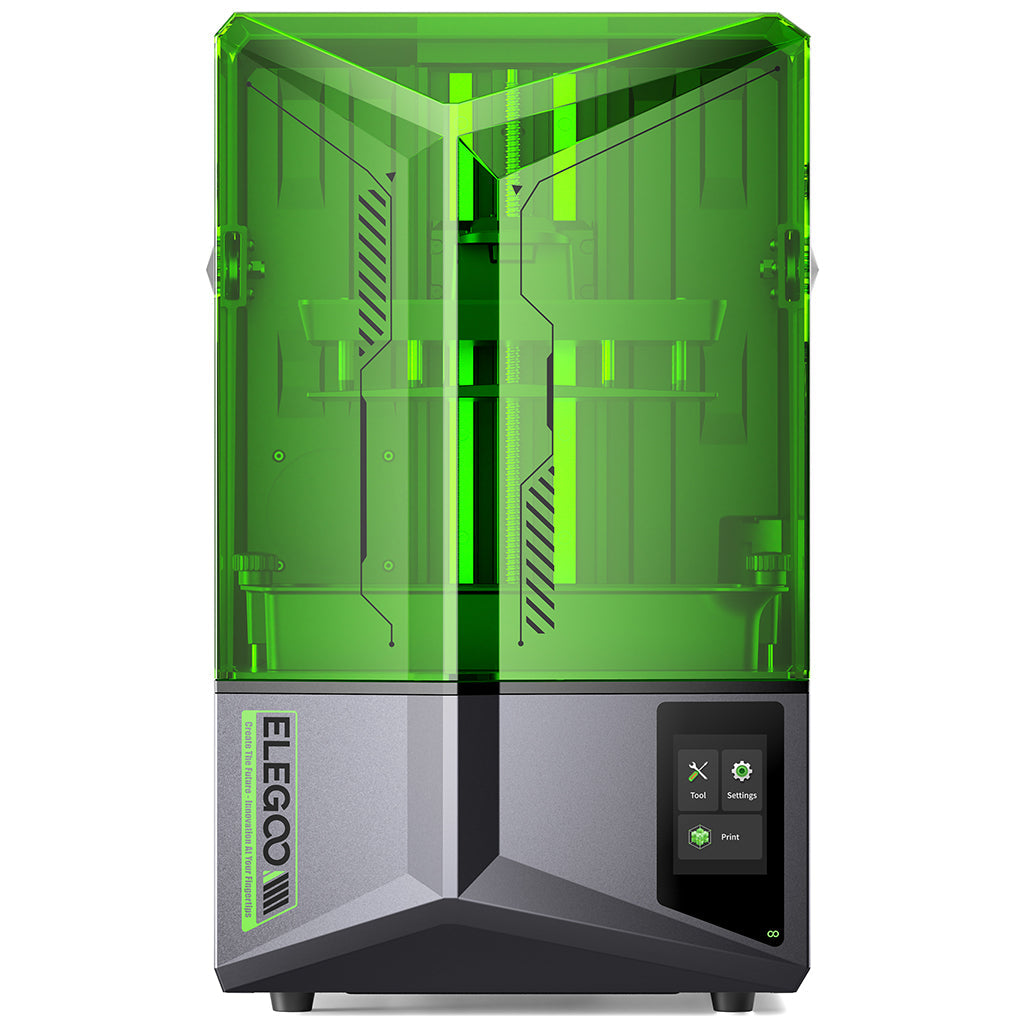
ELEGOO Saturn 4
Saturn 4 (10-inch 12K — not the Saturn 4 Ultra or Saturn 4 Ultra 16K)
The same pitch and plate as its Ultra sibling for appreciably less, with the tilt release and heated vat left out. Those omissions are the whole story.
- Build volume
- 218.88 × 122.88 × 220 mm
- Technology
- Resin (MSLA)
- Max speed
- MAX 70 mm/h (manufacturer maximum)
- Enclosed
- Acrylic UV cover (not a heated enclosure)
- Multi-colour
- No
- Auto levelling
- Yes — one-click automatic levelling with smart mechanical sensor
What we like
- A 10-inch 12K panel and a 219 × 123 × 220 mm plate in the £250–£310 band
- The same 19 × 24 μm pitch as the pricier 12K Ultra on the same chassis
- 0.01 mm layers, one-click levelling and the full set of resin alarms
- A 9H tempered-glass protector over the screen as standard
What we don’t
- No tilt release — more exposed to early-layer failures and harder on film
- No vat heating, which a 10-inch plate in a cold room feels most
- A 70 mm/h quoted maximum against 150 mm/h on the Ultra variants
- USB and a 3.5-inch screen only: no Wi-Fi, no app, no camera
You keep the resolution and the area. Layers still reach 0.01 mm at 0.02 mm Z accuracy, the light source is still a COB emitter with a Fresnel collimating lens at 405 nm, one-click levelling and the resin alarms are present, and the screen ships behind a 9H tempered-glass protector.
What you give up is the mechanism that gets a layer off the film. Reviewers comparing this machine with the Ultra repeatedly point to the missing tilt release as its real weakness, describing it as more exposed to early-layer failures and harder on the release film. On a 10-inch panel that matters more than on a smaller one. There is no vat heating either, and the quoted maximum is 70 mm/h against 150 mm/h on the Ultra variants.
Buy this if you want the largest sensible plate and a 12K pitch for the least money, printing angled, supported parts in a warm room. Skip it if your parts have wide flat bases or the room is unheated — the step up to the 16K buys tilt release, heating and a finer pixel at once.
Biggest build at a 16K label: ELEGOO Jupiter 2
Here the page's argument becomes a purchase decision. This machine says 16K, from a 14-inch panel running 15120 × 6230 — the same pixel count as the Saturn 4 Ultra 16K. Stretched across twice the glass, that count works out at 20 × 26 μm, the coarsest pitch of the six. What it buys instead is a 302 × 162 × 300 mm build volume, roughly four times the plate area of the small formats above.
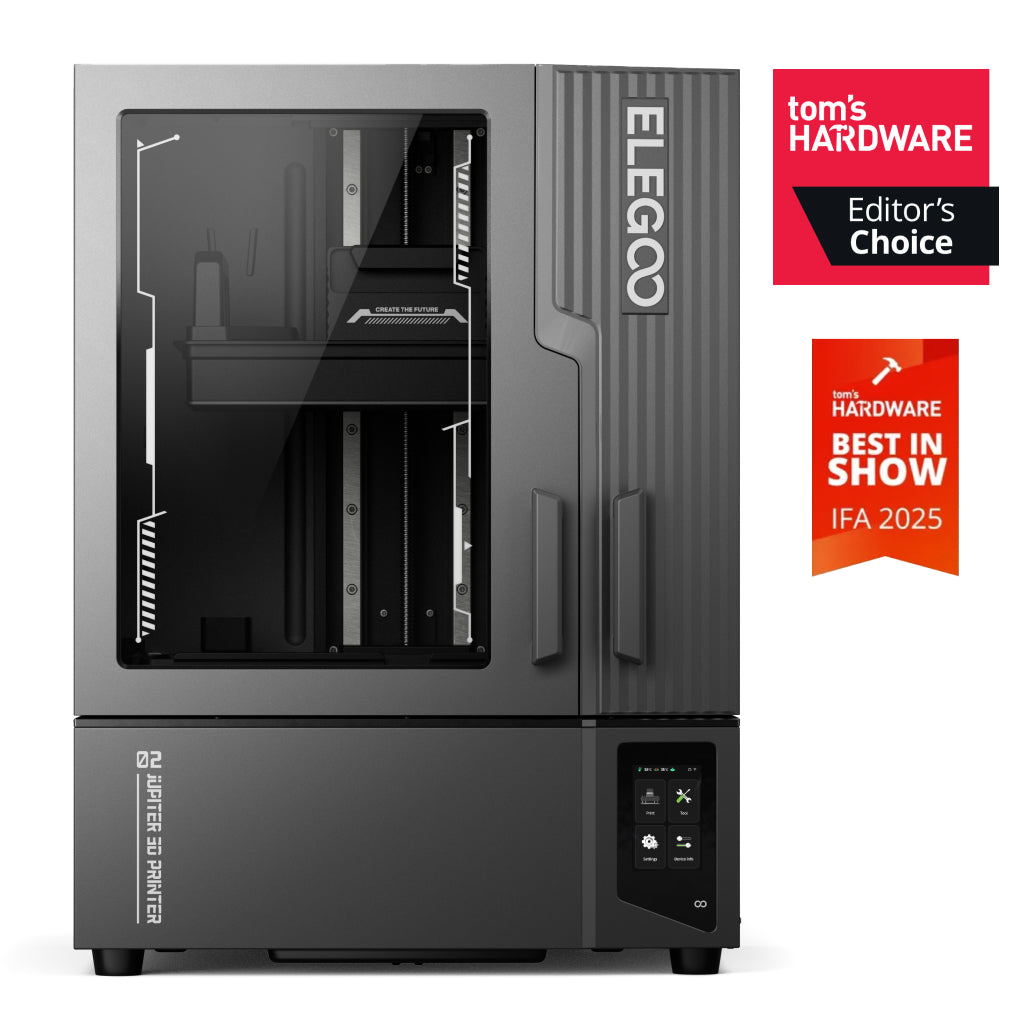
ELEGOO Jupiter 2
Jupiter 2 (16K; not the Jupiter or Jupiter SE)
Buy it for the height and the plate area, not for the 16K on the box. At 20 × 26 μm it resolves more coarsely than every other pick here, including the 9K one.
- Build volume
- 302 × 162 × 300 mm
- Technology
- Resin (MSLA)
- Max speed
- Up to 90 mm/h (manufacturer maximum)
- Enclosed
- Yes — double-door enclosure
- Multi-colour
- No
- Auto levelling
- Yes (auto levelling on four independent force sensors; manual levelling with real-time data feedback also available)
What we like
- 302 × 162 × 300 mm — roughly four times the plate area of the small formats
- Auto levelling on four force sensors, plus automatic resin feed and recycling
- Enclosed, with a double door and a chamber monitoring camera
- Reviewers rate the sharpness of its output and the quality of its build plate
What we don’t
- 20 × 26 μm — the coarsest pitch here, despite the 16K label
- ELEGOO UK direct only; 3DJake cannot deliver this model to Great Britain
- 28.9 kg, and it needs far more clearance than its own width suggests
- Tied to ELEGOO’s own slicer, and 300 W at the wall
That corrects what the label promises rather than criticising the machine. A 20 × 26 μm pixel is still far finer than any filament printer manages, and on parts this size it is rarely what decides the result. The hardware is serious: auto levelling on four independent force sensors, automatic resin feeding and recycling with a heating tank, a double-door enclosure with a monitoring camera, and 0.01 mm layers at 0.02 mm Z accuracy.
Reviewers repeatedly warn that this printer needs far more desk space than its own width suggests, because the doors swing wide and access is from the rear. It is 465 × 508 × 648 mm and 28.9 kg before clearance and draws 300 W. Availability is the other catch: ELEGOO's own UK store only, because 3DJake states it cannot deliver this model to Great Britain.
Buy this if you need the Z height or a plate this large, and understand you are buying area rather than pitch. Skip it if you are buying it because it says 16K — every other pick resolves more finely and most cost less than half as much.
What else decides detail besides the pixel
A pixel size is an upper bound, not a result. Four other things decide how much of it reaches the part.
The vertical half of the resolution. XY pitch sets detail across a layer; layer height sets it up the part, and a fine pixel under a coarse layer is wasted. Five of the six reach 0.01 mm, the Photon Mono 4 Ultra stops at 0.02 mm, and the M7 Pro pairs 0.01 mm layers with 10 μm Z precision against the 0.02 mm ELEGOO quotes. On sloped surfaces that vertical figure shows before the pixel does.
How evenly the light arrives. A mask is only as sharp as what is behind it. Most of these put a COB emitter behind a collimating Fresnel lens, which narrows the beam so it passes through a pixel instead of spreading under its neighbours — the reason two panels of the same pitch can hold an edge differently. The Mars 5 Ultra is the exception on paper, specified without a Fresnel lens. Anycubic publishes intensity figures while ELEGOO publishes none, so the brands cannot be ranked on light output.
How the layer comes off the film. Fine detail is most often lost in release rather than exposure, when suction between the cured layer and the film pulls a thin feature away. Tilting the vat to peel the layer off instead of lifting straight up is a real advantage on wide parts.
Resin temperature. Cold resin is thicker and flows into fine features more slowly. Heating addresses it in hardware — a tank at 30 °C on the 16K and dynamic vat control on the M7 Pro.
Two levers are yours rather than the machine's. One is the film: A recurring recommendation from reviewers is to swap the supplied fast-release film for a clearer type if maximum sharpness matters, accepting slower prints in exchange. The other is the slicer, since anti-aliasing softens the step between pixels by part-curing edge ones in greyscale.
Running costs: electricity, resin and the screen
Electricity is the cheap part. At the capped unit rate of 26.32p per kWh applying from October to December 2026, and using the makers' own rated power, an eight-hour job costs roughly 14p on the 66 W Photon Mono 4 Ultra, around 51p on the 240 W M7 Pro and around 63p on the 300 W Jupiter 2. Treat those as estimated ceilings: a rated figure is what the supply can deliver, not what a machine averages while the LED is dark between exposures. Three of the six publish no printing wattage at all, so no figure is offered for those rather than inferring one from the power brick.
The real running cost of resolution is the panel. An LCD here is a wearing part: it sits in the ultraviolet path for every second of every print and its output degrades. ELEGOO rates the 16K's screen at up to 2,000 hours.
Independent technical sources and forum threads consistently treat the mono panel as a consumable rated in the low thousands of hours rather than a permanent part, which is why a replacement screen belongs in the running-cost sum, although reported working lives vary with how hard the machine is used.This is where a finer screen bills you, and the verified UK replacement prices are consistent. A new 16K panel sits around the £110 to £130 mark, the 9K Mars 5 Ultra screen around £110 and the 14K M7 Pro screen around £120. The 4K panel in the Mars 5 costs around £55, roughly half as much. Spread over its rated life, the 16K screen works out near 6p for every hour the machine prints — several times the hourly electricity of the lowest-draw machine here.
The rest scales the same way: on the 16K a resin tank is around £46 and films come five to a set for around £37. Resin, film, alcohol and an eventual screen are an annual cost, not a one-off.
Buying in the UK: stock, warranty and spares
Five of the six have two UK routes — the brand's own UK store and 3DJake UK, which ships to Great Britain from a European warehouse. The Mars 5 Ultra and the standard Saturn 4 were in stock at 3DJake when checked in September 2026, while warehouse stock on the M7 Pro was at zero with more inbound. The Jupiter 2 is the exception to plan around: ELEGOO's UK store only, which also excludes Northern Ireland, the Scottish Highlands and Islands, Jersey, Guernsey and the Isle of Man for certain oversized items.
Now the part that matters most on a page about resolution: the highest-resolution component carries the shortest warranty on it. ELEGOO covers the machine for twelve months but the LCD for three, with tank and build plate at six — the same split on the Mars 5 Ultra and the Saturn 4. Anycubic covers main components for twelve months and the LCD for six, the better of the two. Either way the panel you are paying a premium for is the part least covered, and after that window it is a purchase rather than a repair.
For the wider picture, start with our guide to the best resin printer uk. If every part you print is a tabletop figure, our resin printers for miniatures guide ranks the same pool against a 28 mm figure instead.
Mistakes buyers make when shopping by resolution
Buying pitch you will never see. Below roughly 20 μm, finish, supports and release matter more than the pixel. Paying a premium to move from the Saturn 4's 19 × 24 μm to the 16K's 14 × 19 μm on parts that will be primed and painted is money that would do more as resin, film and a better wash routine.
Forgetting the room. None of these six filters its own air: the 16K has no built-in filtration, and on the Mars 5 Ultra and Photon Mono 4 Ultra the carbon purifier is a separate purchase. Owner accounts of resin odour in a home vary widely: some describe printing in a bedroom and noticing little, while others treat a ventilated room and added carbon filtration as essential. You cannot know in advance which group you are in, so plan for ventilation.
Budgeting for the printer and not the workflow. A resin print is not finished when it leaves the plate: ELEGOO's manual directs owners to wash models in alcohol unless the resin is water-washable, and they then need curing under UV. No price here includes a wash-and-cure station, alcohol, gloves or a disposal route. Specialist reviewers stress that uncured resin should be cured before disposal rather than washed away, and that resin-contaminated alcohol is hazardous waste.
Assuming a high detail resin printer suits the job at all. For functional brackets, enclosures or anything that must survive being dropped, resin is the wrong technology however fine the pixel, and a filament machine from our best 3d printers uk guide will serve you better.
Which high-resolution resin printer should you buy?
For most people buying on detail the ELEGOO Saturn 4 Ultra 16K is the answer, and the pixel is only half of why. At 14 × 19 μm it is the finest panel available in the UK at this money, but the heated vat and the tilting release are what turn that figure into finished parts in a British room.
If your work is small and orientation-sensitive, the Photon Mono 4 Ultra's square 17 × 17 μm is the better geometry at the lower price. For a fine square pixel with none of the setup work, the Mars 5 Ultra. For the largest detailed plate per job, the M7 Pro. For a 10-inch 12K panel at the least money, the Saturn 4. And if you need the height, the Jupiter 2 is the only option — bought for its volume, not its label.
The ELEGOO Saturn 4 Ultra 16K is the pick, on the finest verified pitch here and the hardware that reaches it. The Saturn 4 is the value choice at the same plate size and a coarser pitch, and the Photon Mono 4 Ultra is the one to take if square pixels matter more than plate area. Whichever you choose, compare the micrometre figure and never the label.
- Buy it if
- You compare pixel size in micrometres rather than K numbers, you want the finest panel available in the UK on a plate worth filling, and you accept that resin printing brings washing, curing and ventilation with it.
- Skip it if
- You are choosing between machines on the K figure alone, you need parts that must survive mechanical use, or you cannot give the printer a ventilated room and a wash-and-cure routine.
How this article was researched
This guide is research-based. No machine here was purchased, operated or photographed by us, and nothing on this page is a measurement we took. Every specification comes from the manufacturer's own product page or manual and carries a citation; price bands and stock positions come from UK retailer listings checked between 8 and 26 September 2026.
Three gaps are worth stating plainly. ELEGOO publishes no printing wattage for the Saturn 4 Ultra 16K, the Mars 5 Ultra or the Saturn 4, so no electricity figure is given for those three. Only one LCD service-life rating could be verified, so it is not generalised. And light output is published by Anycubic but not by ELEGOO, so the brands are not compared on it.
Common questions
- Does screen resolution determine print quality?
- Only partly. The panel sets an upper bound on detail across a layer, and the figure that sets it is pixel size in micrometres rather than the K label. What you actually get is then decided by the layer height, how evenly the light arrives through the panel, how cleanly each layer releases from the film, and how warm the resin is. A 14 μm pixel printing cold resin on a worn film will lose to an 18 μm pixel that has been set up properly.
- Is 16K resin printing worth it?
- It depends which 16K. On a 10-inch panel it buys a genuinely finer pixel — 14 × 19 μm. On a 14-inch panel it buys build area and a pitch of 20 × 26 μm, coarser than a 9K machine on a 7-inch screen. Even where the step is real, reviewers who print miniatures argue the move from 12K to 16K is not visible at normal viewing distance, and that the heated vat the 16K models tend to come with is the more useful upgrade.
- What pixel size should buyers compare?
- XY pixel size in micrometres, quoted per axis, taken from the manufacturer’s own specification page. Both numbers matter, because many panels are finer across the plate than along it, and a single averaged figure hides which way to orientate a part. As a rough guide, under 20 μm is fine enough that finish and supports decide the result; over 30 μm is visible on anything carrying fine raised detail.